Childcare Customer Experience Trends & Insights Report 2026 | AU
Growth-focused CX insights for early learning providers: covering market trends, acquisition and tour conversion, family segments, and the ideal childcare experience.
Download the Insights Report
Survey-based insights with a 95% confidence level and a margin of error of ±5%.
What the Best in the Industry Say About This Report

“Key takeaways were how important it is to measure the customer experience in real-time.”
“Biggest thing for us is a check on the realignment of what we’re doing compared to what the market requirements and needs. Making sure that what we’re doing, we’re doing well.”
“Key takeaway is that no insight or no information is too much information and so finding ways to get better real-time insight is going to be critical for us going forward.”
“The depth of information shared really changed our perspective. We still feel like we didn’t really know what our consumers really wanted so that was really insightful.”




This Exclusive Insight Report Will Cover
At a Glance: What’s Shifting in Early Childcare in 2026
The market has returned to stronger three-day usage, while higher-frequency segments fluctuate—signalling renewed volatility where partial churn risk is strongest.
36%
43%
76%
20%
11%
+14
Growth-focused CX insights: Key Opportunities Index
The opportunity in 2026 is not simply “doing more marketing.” It’s aligning positioning, acquisition journeys, and service design to what families are actually prioritising especially under heightened due diligence and switching intent.

What’s inside: the Early Childcare Industry Insights of 2026
Download the Insights Report
Survey-based insights with a 95% confidence level and a margin of error of ±5%.
Part 1: Market Overview & Trends
The childcare industry is experiencing dynamic growth, with families increasingly seeking flexible, high-quality care solutions. Parents are looking for services that fit seamlessly into their busy lifestyles, with a rising preference for digital platforms that allow easy search, reviews, and booking.
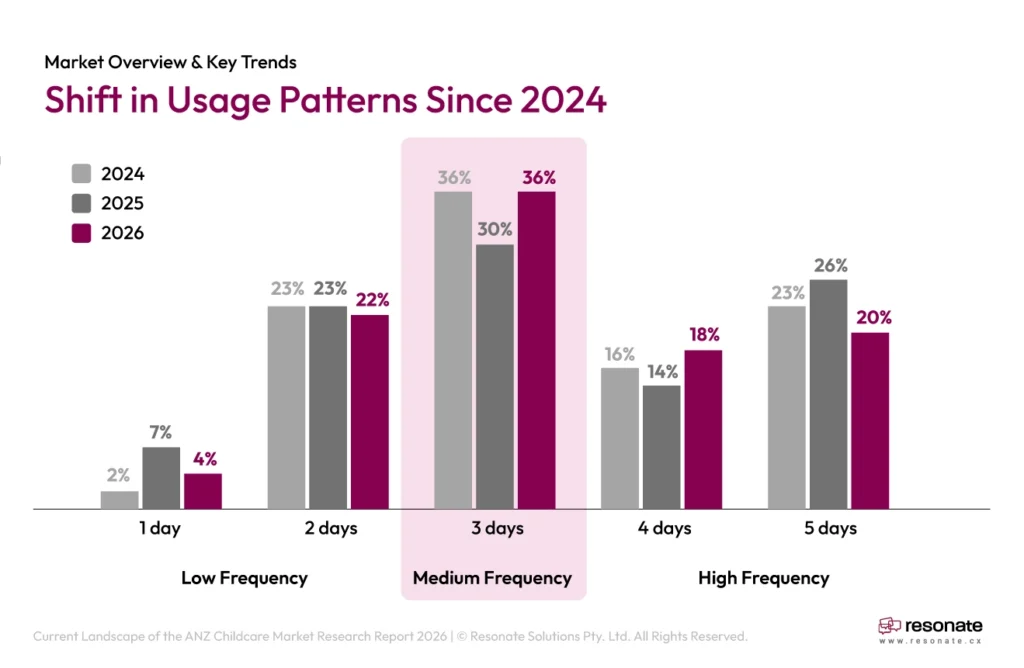
Figure 1. Last year’s shift into four- and five-day care has not been sustained. Three-day usage has climbed back to a third of the market, while higher-frequency users are fluctuating — signalling renewed volatility in the segments that drive partial churn.
Sustainability and eco-conscious choices are becoming more popular, as are inclusive options catering to a diverse range of needs. As the market grows, competition is intensifying, particularly in areas where both parents work full-time, leading to more demand for services like before- and after-school care. This $500 billion industry is set to continue expanding as families’ childcare needs evolve.
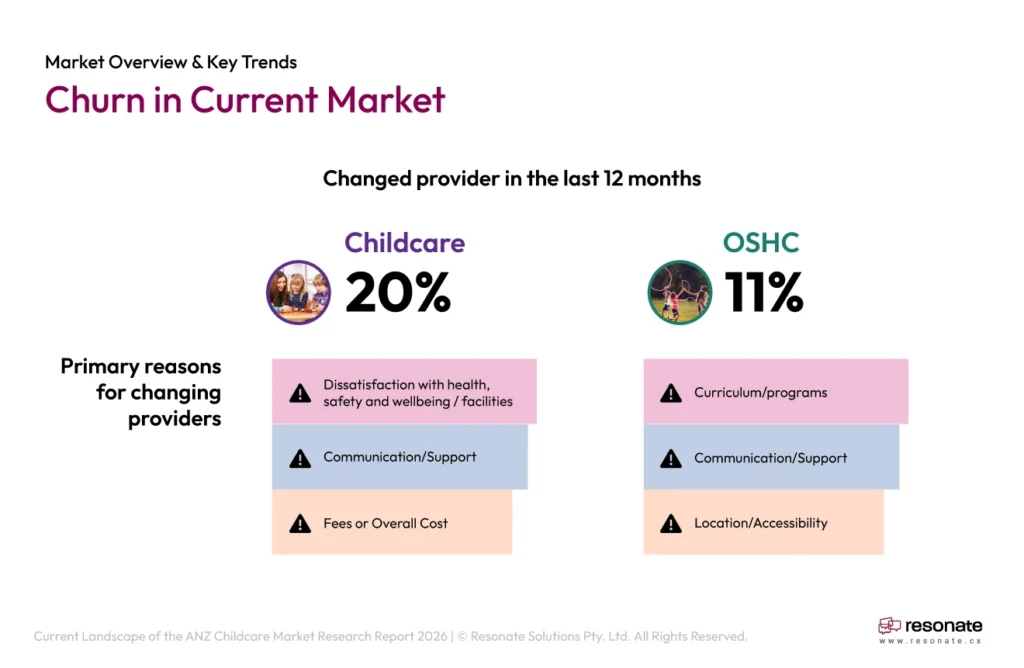
Figure 2. The market is entering a period of heightened due diligence, with parents scrutinising health, safety and wellbeing more closely than before. This increased vigilance is expected to continue over the next 6–12 months.
Part 2: Acquisition and Conversion
For childcare providers, customer acquisition is largely driven by online presence and word of mouth. About 60% of parents use online tools to find care options, while 40% trust personal recommendations. The conversion to actual customers depends heavily on the trustworthiness of the service, including safety protocols, staff quality, and transparent pricing.
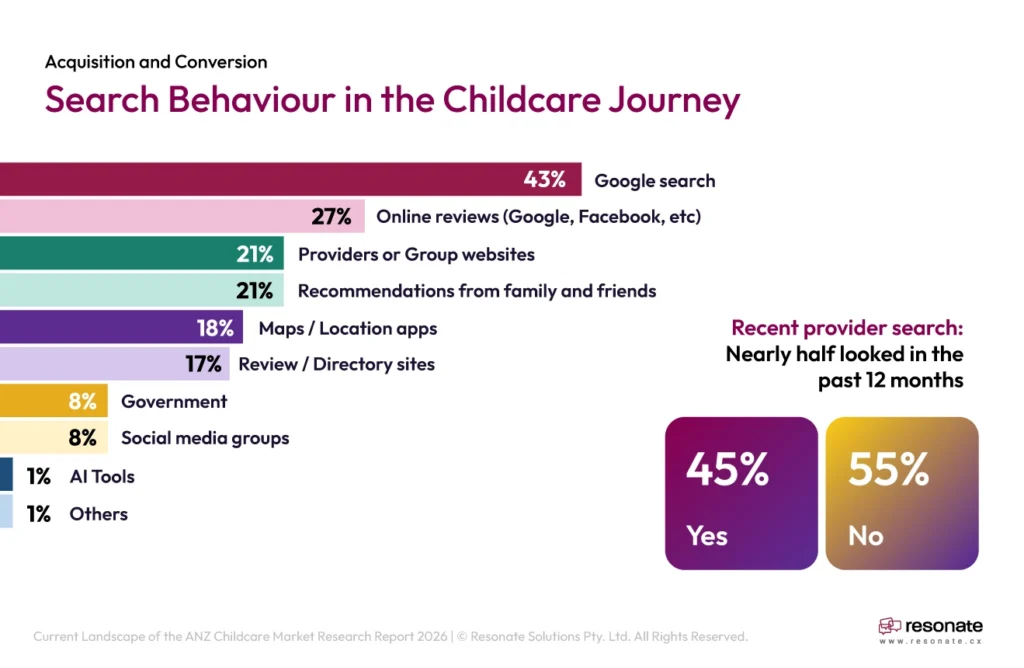
Figure 3. In a tightly connected five-kilometre market, reputation travels fast. With most families only one to two degrees of separation apart, recommendations and reviews carry significant weight in driving search and switching behaviour.
Over 70% of parents prioritize these factors, while ease of booking is another key element in converting leads. Digital booking tools are making a significant difference in both attracting and retaining customers, with 65% of families citing them as a deciding factor.
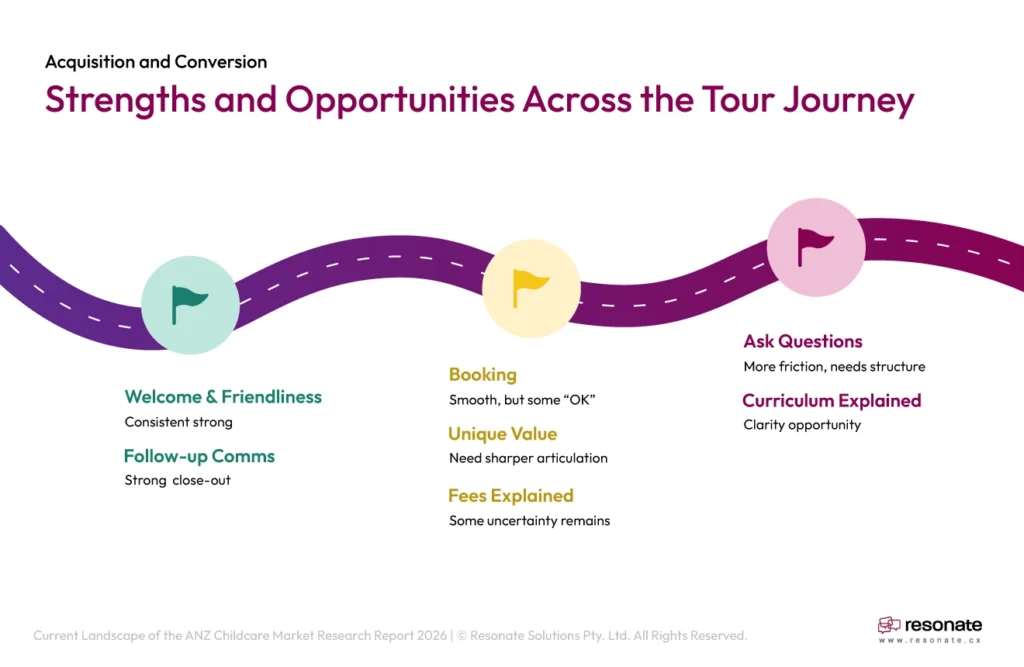
Figure 4. The biggest opportunity lies in structured objection handling. Families want more questions asked and more space to surface concerns, rather than a purely friendly but passive tour experience.
Part 3: Family Segments – Who Uses Childcare and Why
Childcare usage is primarily driven by dual-income households and single-parent families, with children under five being the most common demographic. Parents often use childcare to balance work and home life, but also seek socialization and early educational opportunities for their children.
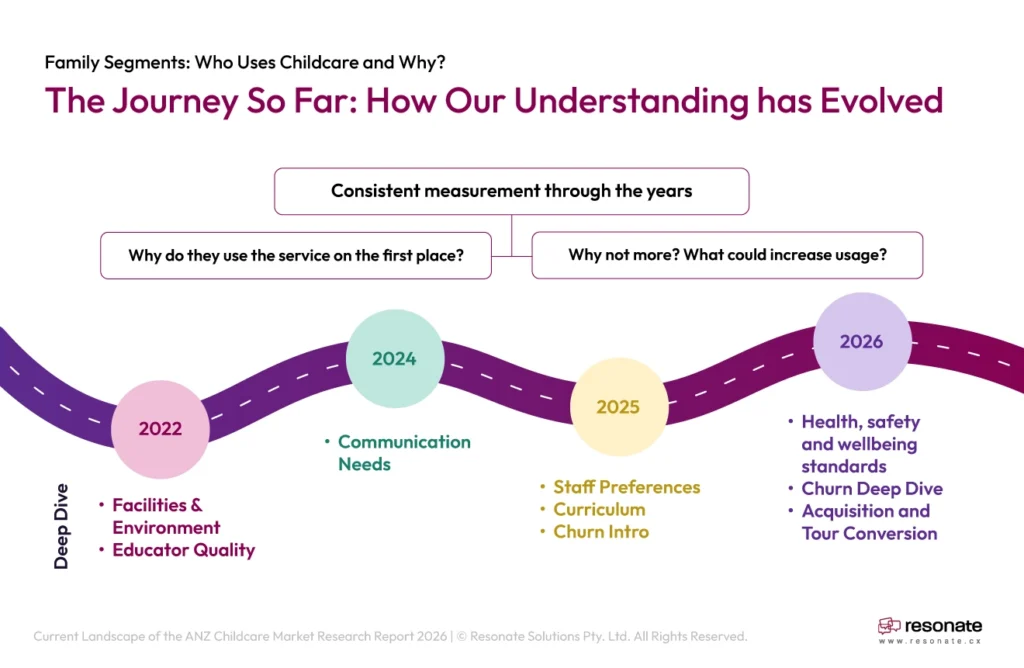
There’s also a growing demand for specialized care, particularly for children with disabilities or additional needs. As early childhood education becomes more valued, parents are seeking providers who offer developmental programs that nurture their child’s learning and growth in a safe and supportive environment.
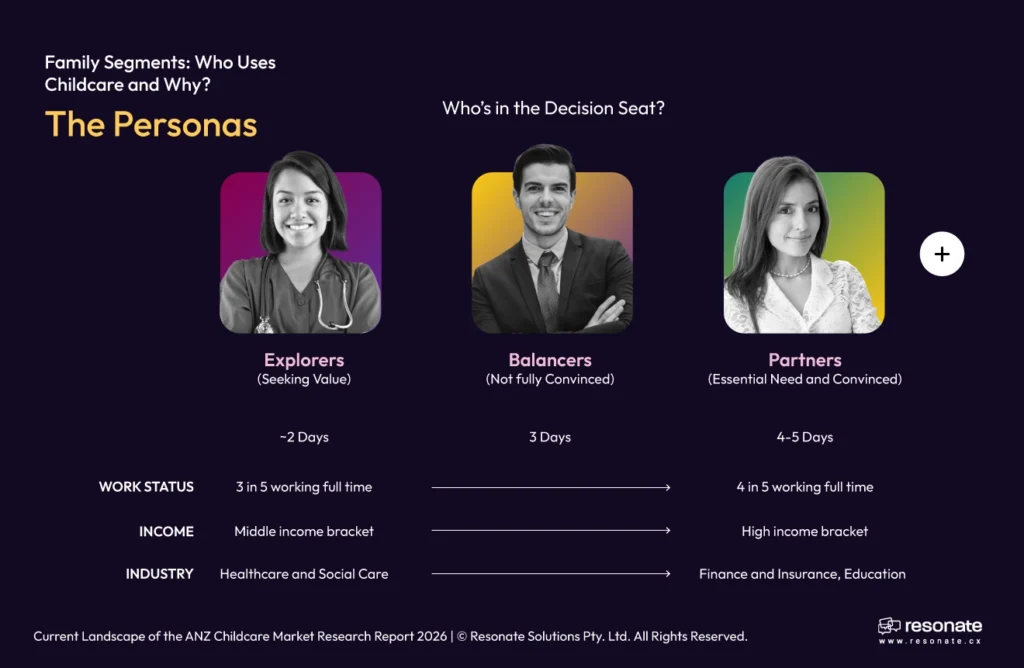
Figure 6. The three personas are behavioural segments, meaning usage patterns, and attitudes matter more than income or background alone.
Part 4: The Ideal Childcare – What Families Want
Parents are no longer just looking for basic childcare but for environments that support their child’s emotional, social, and educational development. The ideal childcare setting offers safety, flexible hours, and personalized care that aligns with parents’ educational values, such as STEM or language programs.
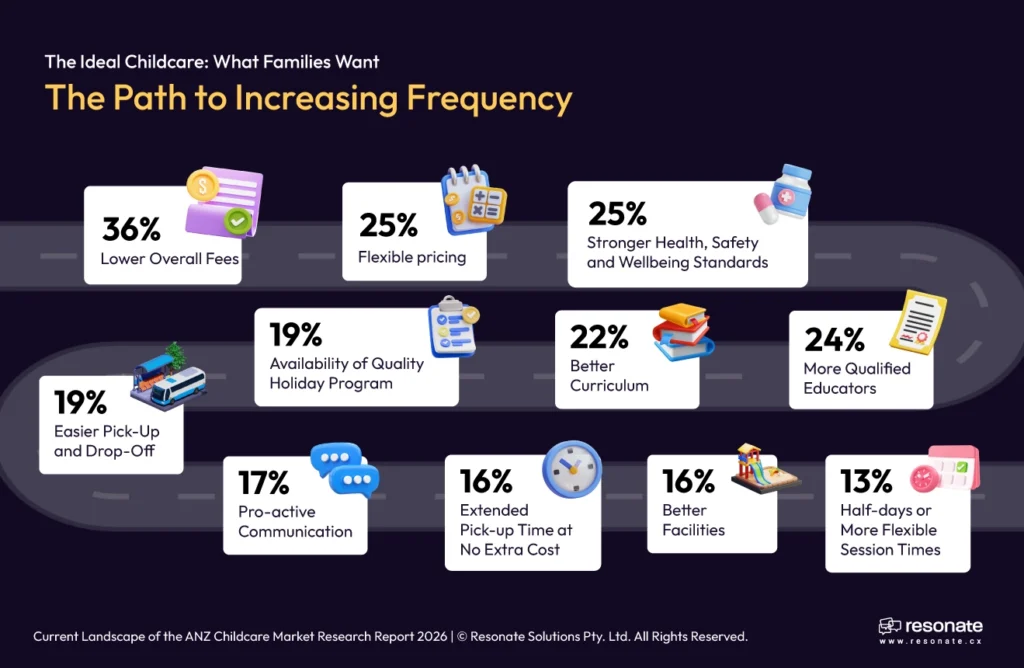
Figure 7. Increasing frequency is less about aspiration and more about reducing financial and logistical friction. The perception of flexibility can be as influential as structural flexibility, because families are seeking reassurance that their commitments can adapt to changing work and life circumstances.
Pricing transparency is key, with many families willing to invest more in quality care. The growing importance of emotional support and a nurturing environment is also central to the decisions parents make when selecting a childcare provider. Families are looking for more than just a service—they want a partner in their child’s development.
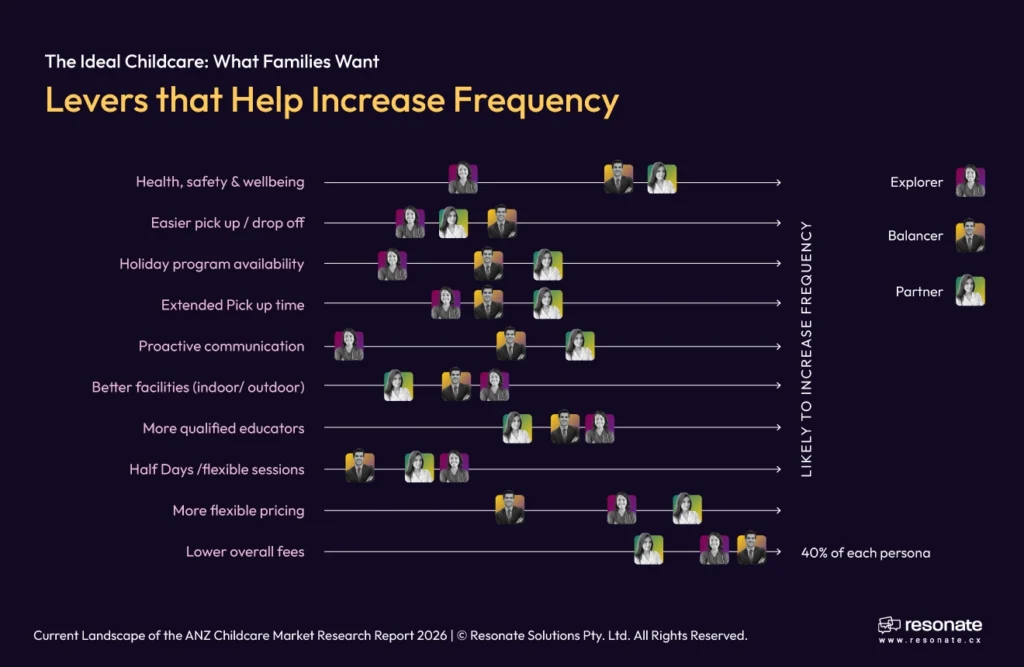
Figure 8. Families are willing to pay more when the service meaningfully reduces stress and complexity in their daily routine. The premium is for ease and simplicity.
Loved by Leading Childcare Centres Across the Globe































FAQs
We Are the Right CX Partner for You
Speak to us and find out how we can help your business thrive.
Recognised for CX Excellence: Spring 2026