Childcare and Before & After School Care Customer Experience Opportunities 2026 Webinar | USA
Gain insights into parent priorities, evolving childcare needs, curriculum expectations, and regional trends to secure your childcare centre’s future.
Don’t Miss the Release
Key Opportunities Emerging Across Childcare in 2026
Resonate CX presents its Childcare Customer Opportunities Market Report, delivering a comprehensive view of the customer insights shaping 2026 across the United States.
The report reveals what families across the U.S. are truly telling childcare providers—uncovering hidden opportunities, emerging risks, and critical experience gaps that will define the year ahead.
Built for childcare leaders who want to stay ahead of evolving customer expectations, the report turns insight into confident, practical action—providing clear direction to support planning and decision-making in 2026.
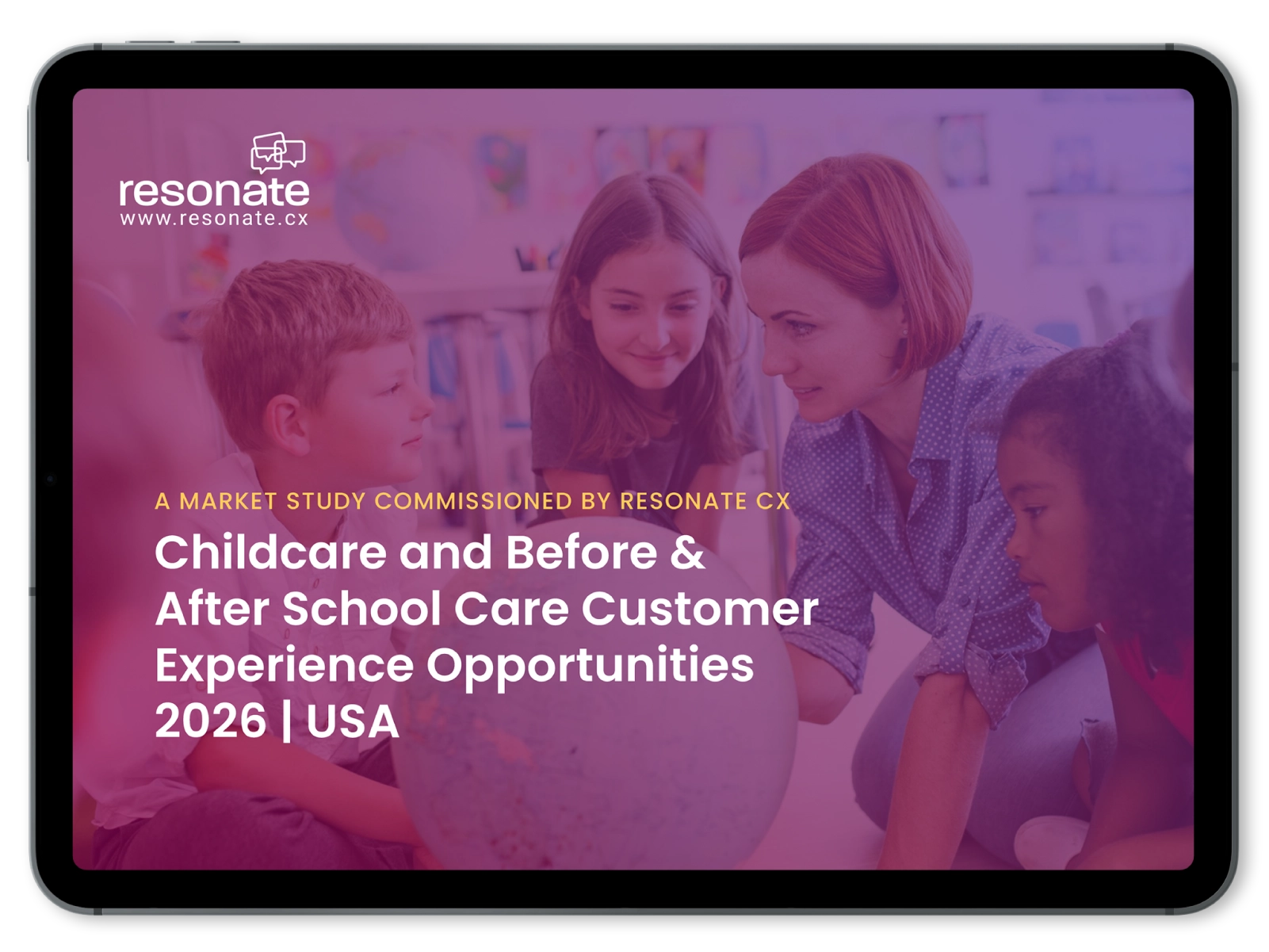
This exclusive insight report will cover:
Growth-focused CX insights: Key Opportunities Index
The opportunity in 2026 is not simply “doing more marketing.” It’s aligning positioning, acquisition journeys, and service design to what families are actually prioritising especially under heightened due diligence and switching intent.

Don’t Just Take Our Word For It — Hear From Childcare Leaders Across Australia and the UK

“Key takeaways were how important it is to measure the customer experience in real-time.”
“Biggest thing for us is a check on the realignment of what we’re doing compared to what the market requirements and needs. Making sure that what we’re doing, we’re doing well.”
“Key takeaway is that no insight or no information is too much information and so finding ways to get better real-time insight is going to be critical for us going forward.”
“The depth of information shared really changed our perspective. We still feel like we didn’t really know what our consumers really wanted so that was really insightful.”
“Impressed by seeing the various opportunities between different levelness of people and seeing how important ongoing communication is from Day 1 and how we streamline those communication to make them more effective.”
“Key takeaway for me is definitely about ease and making it as seamless as possible for the parents.”
“Key takeaway was all about the Customer Personas. Really insightful to understand them. How they work, how they want to view what their children are doing everyday which is really beneficial.”
“You realise the power of data, particularly in our sector where care and service is our bread and butter and I think learning how we can better service our customers and our staff and using data to inform the decisions you’re making is really key.”








Loved by Leading Childcare Centres Across the Globe





























FAQs
We Are the Right CX Partner for You
Speak to us and find out how we can help your business thrive.
Recognised for CX Excellence: Summer 2026







Related Resources
-
- Report

Nurseries Customer Opportunities 2026 United Kingdom | Report
Gain insights into parent priorities, evolving nursery needs, curriculum expectations, and regional trends to secure your nursery centre’s future. -
- Report
Childcare Customer Opportunities 2026 Australia | Report
Gain insights into parent priorities, evolving childcare needs, curriculum expectations, and regional trends to secure your childcare centre’s future. -
- Report
Childcare Customer Opportunities 2025 New Zealand | Report
New Zealand - Your essential guide to understanding evolving customer needs, identifying growth opportunities, and navigating the future of childcare services.