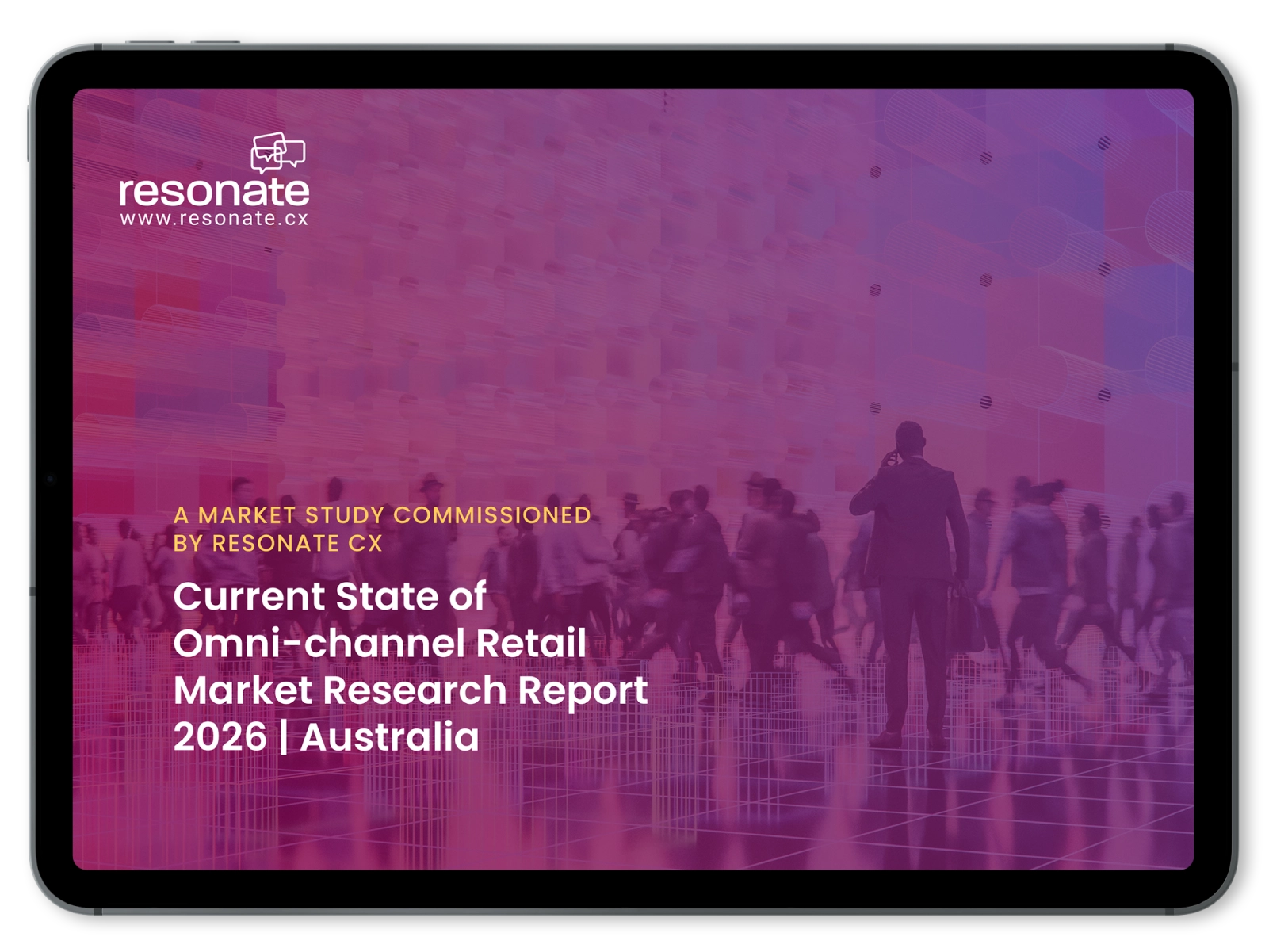
Current State of Omni-Channel Retail 2026 | Australia
Explore the current state of omni-channel retail in Australia, with data-driven insights into evolving customer behaviours, key friction points, and the opportunities to create seamless, high-performing retail experiences across every touchpoint.
Download the Insights Report
The Strategic Opportunities Shaping Retail’s Future
Resonate CX presents its 2026 Retail Market Insights Report, offering a comprehensive view of the current state of omni-channel retail in Australia. As a leading Customer Experience platform, Resonate CX continues to uncover the trends, behaviours, and performance drivers shaping the future of retail.
This year’s report delivers an in-depth analysis of evolving consumer behaviours, shifting shopping preferences, and the growing demand for seamless integration across digital and physical channels. Powered by extensive market research and Voice-of-Customer (VoC) analytics, it explores omni-channel performance realities — from conversion and cart abandonment to fulfilment expectations and in-store experience alignment.
Dive into the insights defining Australia’s retail landscape and discover practical, data-driven strategies to optimise customer interactions, improve conversion, increase basket size, and stay competitive in an increasingly connected retail environment.
This Exclusive Insight Report Will Cover
Gain Exclusive Access
This Is Why Leaders Attend

“Key takeaways were the smooth returns process and how to identify shoppers without direct interaction.”
“The returns process to gain market share and the importance of loyalty programs to keep customers engaged.”
“The report highlights how consumers are shifting between segments, evolving, and spending in new ways.”
“This got our attention to the voice of customer and messaging around convenience and speed purchase.“


Stop Guessing, Start Growing.
Know exactly where shoppers drop off and fix it before it costs you revenue.
FAQs
We Are the Right CX Partner for You
Speak to us and find out how we can help your business thrive.
Recognised for CX Excellence: Spring 2026






Related Resources
-
Reports

Current State of Omni-Channel Retail 2025 Australia | Report
Get first-hand insights on huge conversion opportunities in the Australian Retail Market. Leverage CX expertise, dominate the retail landscape, and maximise ROI with expert-level CX insights. -
Reports
Consumer Insights Report: What CX is Driving In-Store Conversion 2024 | Report
Get first-hand insights on huge conversion opportunities. Leverage CX expertise, dominate the retail landscape, and maximise ROI with expert-level CX insights. -
Reports
The Current State of Brick-and-Mortar Retail Customers 2023 | Report
Gain valuable insights and an in-depth understanding of customer habits in relation to their shopping at physical retail stores.