TLDR:
- Social listening is the practice of monitoring what customers say about your brand in public channels: reviews, social media, forums, and online communities.
- Most dissatisfied customers do not complain directly to businesses. They post publicly, often without tagging the brand at all. Social listening captures this invisible feedback stream.
- The CX value of social listening lies not in monitoring alone but in acting: responding to reviews, identifying recurring themes, and using public feedback to improve the experiences that are generating them.
- Review response speed and consistency are among the highest-visibility CX signals for prospective customers. How you respond to a 1-star review is often more influential than the 5-star ones beside it.
- Combining social listening with structured post-interaction feedback gives CX teams a complete view of customer sentiment: what people say to you and what they say about you.
Introduction
Your customers are talking about your brand right now. Most of them are not talking to you.
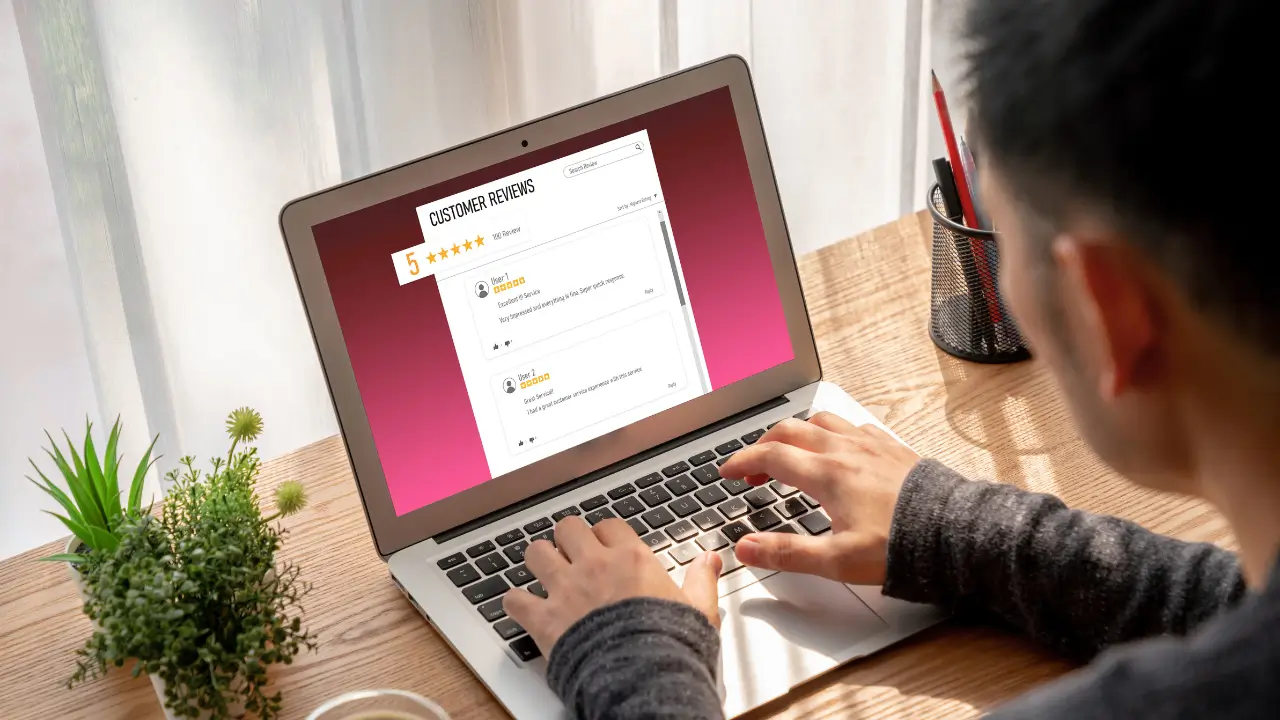
They are leaving reviews on Google, posting on LinkedIn, commenting in Facebook groups, and mentioning your brand name in places your CX team may never see. Some of it is positive. Some of it surfaces problems you didn’t know existed. And some of it is shaping the opinions of prospective customers who will never give you a direct chance to respond.
Social listening is the systematic process of monitoring, capturing, and acting on this public conversation. For CX leaders, it is not a marketing function. It is a feedback channel that operates whether you pay attention to it or not.
This guide explains exactly how social listening can be used to improve customer experience: what to monitor, how to act on what you find, and where it connects to the broader CX improvement cycle. For the structured feedback side of the picture, how to create and measure a customer satisfaction survey covers how to capture what customers tell you directly.
CX Guides | free to download
No fluff. Just CX strategy guides for real-world use. Get tips from the experts.
What Is Social Listening in a CX Context?
In a marketing context, social listening tracks brand mentions, hashtags, and share-of-voice metrics. In a CX context, it does something more direct: it captures what customers are actually saying about their experience with your business and gives you the information you need to improve it.
The channels that matter most for CX social listening are:
- Google reviews, the highest-trust review platform for most industries; they directly affect local search visibility and conversion
- Industry-specific review platforms, Yelp, TripAdvisor, Trustpilot, Seek, RateMyAgent, depending on your sector
- Facebook reviews and recommendations
- Social media brand mentions, tagged and untagged references across LinkedIn, Instagram, Facebook, and X
- Online communities and forums, Reddit, industry Facebook groups, local community pages
The insight from each channel is different. Google reviews tend to surface post-experience assessments. Social media mentions often reflect in-the-moment reactions. Industry forums surface recurring patterns over time. An effective social listening strategy monitors across all of them, not just the channels the brand actively manages.
How Social Listening Differs From Traditional Customer Feedback
Traditional customer feedback is solicited: you send a survey, a customer responds. Social listening is unsolicited: customers share their experience on their terms, in their own language, without a structured question guiding their response.
This distinction matters because:
It reaches customers who would not complete a survey.
The customers most likely to express dissatisfaction publicly are also among the least likely to fill in a formal feedback form. Social listening captures sentiment from these customers by default.
It reflects how customers actually describe their experience.
Without a survey structure guiding the language, customers say exactly what they mean. This produces insight in their own words, often more revealing than a five-point scale.
It is visible to everyone.
Unlike a survey response that sits in a CX dashboard, a public review is seen by prospective customers, employees, and competitors. How your business responds to public feedback is itself a customer experience signal.
It is continuous.
Social listening produces a real-time, always-on stream of sentiment data, not a periodic sample.
The limitation: social listening alone is not sufficient. It skews toward the customers who were either very satisfied or very dissatisfied. The middle ground, where most loyalty decisions are actually made, is better captured through structured post-interaction feedback. The strongest CX programmes use both. For a complete view of how customer feedback works across channels, the comprehensive guide covers formats, channels, and best practices in one place.
6 Ways Social Listening Can Improve Customer Experience
1. Catch CX Problems You Would Not See Otherwise
The majority of dissatisfied customers do not complain through formal channels. Research consistently shows that unhappy customers are far more likely to share their experience online than to raise it with the business directly.
A branch location with a recurring staffing issue, a product line generating repeated quality complaints, a customer service policy that confuses every third buyer: these patterns show up in reviews and social mentions before they show up in NPS data. Social listening gives you early visibility into issues that structured feedback may underweight or miss entirely.
Monitoring for recurring themes across review text is the key skill. A single negative review about “wait times” is noise. Thirty reviews in six weeks all mentioning “wait times” at the same location is a signal that requires an operational response. How customer experience affects online reputation explores the direct link between service quality and what shows up on review platforms.
2. Respond to Reviews as a CX Intervention
Review responses are not a brand management exercise. They are a direct customer experience interaction, visible to the reviewer and to every prospective customer who reads the thread.
When a 1-star reviewer posts about a poor service experience and receives no response, two things happen: the original customer feels dismissed, and every future reader sees that the business ignores complaints. When the same reviewer receives a prompt, genuine, specific response, the dynamic reverses: the original customer is acknowledged, and prospective customers see a business that takes feedback seriously.
Response speed matters. A review response sent within 24 hours signals genuine attentiveness. A response sent four weeks later, clearly written by someone who did not read the review carefully, signals the opposite.
For multi-site businesses, the volume of reviews makes manual monitoring unmanageable. A centralised review management dashboard, filtering by location, platform, and response status, makes it operationally viable to ensure every review receives a response within an agreed timeframe. How to handle fake online reviews is also worth having in your toolkit as review volume grows.
3. Use Review Promoters to Amplify Authentic Advocacy
Social listening is not only defensive. When customers post positive reviews and social mentions, that content is working for your brand continuously: it influences search rankings, prospective customer decisions, and staff morale.
The gap most businesses leave on the table: they wait for customers to leave reviews voluntarily, rather than creating a structured mechanism to prompt satisfied customers at the moment they are most likely to act. A customer who has just completed a positive survey experience is at peak engagement. Redirecting them to leave a public review at that moment produces authentic, high-quality reviews far more efficiently than passive accumulation.
This is the principle behind Review Amplifier, Resonate CX’s feature that inserts a review prompt at the end of the survey flow, channelling satisfied survey respondents directly to Google or other review platforms while their experience is still fresh. For a detailed look at this approach, how to amplify online reviews and why it matters for your brand covers the strategy and mechanics.
4. Benchmark Public Reputation Across Locations
For businesses operating multiple sites, the star rating distribution across locations tells a story that company-wide metrics obscure. A hospitality group with an average Google rating of 4.1 may have flagship sites at 4.7 and underperforming sites at 3.2. The average hides the problem.
Location-level review monitoring allows CX and operations teams to identify underperforming sites quickly. See how this applies to hospitality in the restaurant customer experience guide. Teams can:
- Identify which sites are generating the most negative public sentiment
- Surface the specific topics driving low ratings at each location
- Compare review volume and response rates across the group
- Track improvement over time as interventions are made
When this data is visible in a single dashboard, area managers and brand teams can act on specific locations without manual compilation across platforms.
5. Identify Emerging Issues Before They Escalate
The speed at which a service problem can become a reputational one has compressed significantly. A frustrated customer who posts about a poor experience can generate engagement, shares, and follow-on reviews within hours, especially if the account has an audience or the post touches a shared grievance.
Social listening tools that include automated alerts, notifying teams of new reviews or mentions in real time rather than in a weekly digest, give businesses the window to respond before an issue compounds. A single negative post that receives a genuine, prompt response rarely becomes a crisis. The same post left unaddressed for days becomes a thread.
6. Feed Public Sentiment Into Your CX Improvement Programme
The most sophisticated use of social listening in CX is not reactive monitoring but proactive integration. When the themes emerging in public reviews are fed back into the CX improvement cycle, the result is a feedback system that captures both the customers who complete surveys and the customers who never would.
Resonate CX’s Text Analytics capability can process open-text review content alongside survey verbatims, identifying the topics and themes appearing most frequently across both channels. This gives CX teams a complete picture of customer sentiment rather than a partial one.
For example, if post-purchase surveys are showing high satisfaction with product quality but negative reviews are consistently mentioning “returns process,” the gap between structured and unstructured feedback has revealed a CX problem that surveys alone would not catch. Fixing it requires integrating both data sources.
How Resonate CX Helps With Social Listening and Review Management
Social Suite / Reviews Manager Dashboard.
A centralised view of Google review performance across all business locations: ratings, trends, response rates, unread reviews, and matched reviews generated from Resonate CX surveys. Multi-site CX and marketing teams manage their entire review presence from a single platform rather than checking each location’s Google profile separately.
Review Amplifier.
Turns survey promoters into public reviewers at the moment of peak satisfaction. When a customer completes a post-interaction survey with a positive score, Review Amplifier prompts them to share their experience publicly on Google or another nominated platform. The result: a higher volume of authentic reviews that reflect the experiences your business has already captured in private feedback.
Automated Alerts.
Daily and weekly review digests notify CX and operations teams of new reviews across all locations, so nothing goes unread and response SLAs can be maintained without requiring constant platform monitoring.
In-Platform Review Responses.
Respond to customer reviews directly within Resonate CX rather than navigating individual platform profiles. This keeps response workflows in a single system, supports consistent response quality, and makes it easier to report on response time and coverage.
Risk Radar Integration.
When critical review content or specific negative themes are flagged, Risk Radar can route the alert to the relevant site manager or CX team member for immediate action, connecting public reputation management to the same closed-loop feedback system that handles private low-score responses.
The Limits of Social Listening: What It Cannot Tell You
Social listening is a powerful layer in a CX programme, but it is not a replacement for structured feedback.
Reviews and social mentions skew toward extremes: the most satisfied and the most dissatisfied customers. The large middle segment, the customers who are quietly deciding whether to return or switch, rarely leaves a public trace. Their decision is captured in structured survey data, not in Google review patterns.
Social listening also lacks the demographic and behavioural context that survey data provides. A negative review about “wait times” tells you there is a problem. A post-interaction survey linked to customer profile data tells you which customer segment is experiencing it, at which locations, and at what times of day. Customer experience data integration explores how connecting public and private feedback channels gives CX teams a complete picture rather than two partial ones.
The most effective CX programmes use social listening and structured feedback as complementary data sources: public channels reveal what customers say about you, structured channels reveal what they say to you. Together, they give a complete view.
Conclusion
Social listening is not optional for businesses that care about customer experience. Whether you monitor it or not, customers are posting, reviewing, and talking. The only question is whether you are in the conversation.
The practical value of social listening in CX is specific: catching problems before they compound, responding to reviews in a way that signals accountability, turning satisfied customers into vocal advocates, and feeding public sentiment into the improvement systems that structured feedback drives.
The businesses that do this well are not the ones doing the most monitoring. They are the ones that act on what they find, consistently, quickly, and with a process that scales. How to build a customer-centric culture in 5 practical steps is a useful companion for teams looking to embed this kind of systematic responsiveness across the organisation.
Run an AI-powered CX program beyond surveys
See our platform in action. A live demo tailored to your organization’s needs.









Alvier Marqueses
More Articles
-
- Blog

5 Customer Experience Examples and the CX Lessons They Teach.
A useful customer experience example should show more than a good score or a successful survey program. It should show -
- Blog
Customer Journey Analytics: How to Identify Friction and Improve CX
Learn how customer journey analytics connects feedback, behavior, and operational data to identify friction and improve customer journeys. -
- Blog
What Is Customer Experience Management?
Learn what Customer Experience Management (CXM) is, how it works, and what to look for in a platform that helps organizations measure and improve CX.



Resonate CX Resources

The Definitive Guide to Choosing the Right CXM Software
Choosing the right CXM software takes strategy, requiring you to define goals, assess integrations, and select a long-term partner.
Why Invest in a CX Platform: A Strategic Move for Competitive Advantage
Discover why a CX platform drives better experiences, loyalty, and sustainable growth.
Should You Invest in a Customer Experience Management Platform?
This guide walks through the five factors that determine whether now is the right time to invest.
How to Prove the ROI on CX to Your Board
Learn to prove ROI of Customer Experience by turning sentiment into revenue, retention, and risk insights.
4 Critical Signs You Need a New CXM Platform Solution
Is your CX platform holding you back? Data silos, stagnant metrics, slow insights, and poor integration signal it’s time to upgrade.
NPS Software Buyer’s Checklist: 47 Questions to Ask Vendors
NPS software helps you choose smarter with 47 key questions for better insights, workflows, and impact.
How to Combine NPS and Voice of Customer for a Complete CX Measurement System
Discover how NPS and VoC connect to turn feedback into loyalty and growth.
How Long Does CX Implementation Take? Timeline and Success Indicators
CX implementation timeline? Learn more about honest expectations and proven framework to accelerates success.