TLDR:
As the world of CX matures, so does our use of tools and data. The humble Customer Journey Map – for so long the province of workshops and post-it notes – is a great example.
These workshops can undoubtedly bring value by developing a shared understanding of a customer’s journey with your brand – especially if care has been taken to involve real customers. There is also value in seeing the end-to-end (intended & unintended) contributions of internal functions that are not often visible. However, what happens to the accumulated corporate memory beyond the workshop day? Does it just walk out the door? There is, no doubt, some level of follow-up documentation – even beautifully produced graphics – but the point is that, the Customer Journey Map is a static view assembled in one workshop day.
When it can (& will) be so much more.
I can see a day when the Customer Journey Map becomes dynamic – and the dominant “frame” through which CX programs are measured and acted upon. The “Shift to Customer Journey Insights” (Bruce Temkin) is already being talked about.
The fundamental reasons for this are already established in the static CJM world:
- Customers may be encouraged by the improvement of a Contact Centre interaction (a “touchpoint”) but are far more impressed at being able to achieve what they set out to do (an “episode” or “job to be done”).
- Collaboration and co-operation across different internal business functions is greatly enabled by a visual appreciation of the end-to-end journey
However, what happens when we make CJM dynamic? What happens when we “digitise” the CJM view, integrate real-time data feeds (e.g. NPS ratings and verbatim analysis) and allow for different “treatments” of customer episodes.
This opens up a world of possibilities:
- Real-time NPS data allows a visual representation of what touchpoints matter within an episode; and more importantly, which episodes matter to Brand NPS & sales growth; i.e. a very quick fix on “measuring what matters”
- With some careful design, the personas usually incorporated in CJM should reflect meaningful segments that can be used to drill down on. So, for example, what does this insurance claim episode look like for females over 50 with incomes of x.
- Similarly, just about any meaningful attribute from store/branch location, to time of day or day of week, to transaction value to channel used – should be available as a way of investigating the data. Not as an analysts tool – but as a way for a broad base of end-users to interrogate data in a visual way that is familiar to them (& customers!)
- And what about some A/B testing – some “test & learn”. Let’s take one cohort of customers and treat them differently (add, remove or adjust a process), examine against a baseline and make adjustments.
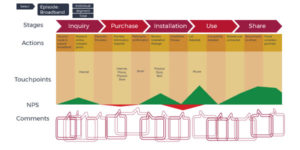
I don’t wish to trivialise the challenges in setting up such a regime. There are some fundamental design & data issues that need to be addressed not the least of which are:
- Agreeing a clear definition of what qualifies as an episode and where it starts and finishes
- Enabling the data to support all aspects of the CJM view
- Incorporating the tools to reconfigure the CJM view
However, as proponents of current CJM initiatives will attest – this view of the world brings data to life and drives employee collaboration even with a static view. Establish some dynamic views and watch this drive-up CX programs to the next level!
Run an AI-powered CX program beyond surveys
See our platform in action. A live demo tailored to your organization’s needs.








Jeff Carruthers
More Articles
-
- Blog

Multi-Location Customer Experience Platform: From Local Feedback to Network-Wide Action
A customer can have an excellent experience at one branch and a frustrating one at another and your company-wide average may barely show the difference. -
- Blog
How to Choose Customer Feedback Software: A Practical Buyer’s Guide
Choosing customer feedback software is not about finding a tool that collects the most responses. It is about finding a platform that helps your team understand customer needs, identify important… -
- Blog
How to Build a CXM Platform Business Case Leadership Can Approve
Customer experience leaders are under increasing pressure to prove that technology investments solve measurable business problems. Forrester’s 2027 Budget Planning Guides found that 55% of customer experience leaders expect their…



Resonate CX Resources

The Definitive Guide to Choosing the Right CXM Software
Choosing the right CXM software takes strategy, requiring you to define goals, assess integrations, and select a long-term partner.
Why Invest in a CX Platform: A Strategic Move for Competitive Advantage
Discover why a CX platform drives better experiences, loyalty, and sustainable growth.
How to Drive Business Outcomes with Your Customer Experience Program
This guide walks through the five factors that determine whether now is the right time to invest.
How to Prove the ROI on CX to Your Board
Learn to prove ROI of Customer Experience by turning sentiment into revenue, retention, and risk insights.
4 Critical Signs You Need a New CXM Platform Solution
Is your CX platform holding you back? Data silos, stagnant metrics, slow insights, and poor integration signal it’s time to upgrade.
NPS Software Buyer’s Checklist: 47 Questions to Ask Vendors
NPS software helps you choose smarter with 47 key questions for better insights, workflows, and impact.
How to Combine NPS and Voice of Customer for a Complete CX Measurement System
Discover how NPS and VoC connect to turn feedback into loyalty and growth.
How Long Does CX Implementation Take? Timeline and Success Indicators
CX implementation timeline? Learn more about honest expectations and proven framework to accelerates success.