TLDR:
- CX technology doesn’t fail because the tools are poor, but because the strategy, alignment, and human insight guiding them are weak.
- Up to 70% of CX initiatives underperform or stall due to misalignment across people, processes, and purpose, not a lack of software or AI.
- Technology can surface data and automate actions, but it cannot prioritise what matters, fix broken processes, or create shared understanding across teams.
- Sustainable CX transformation starts with clear CX strategy, empowered employees, and operationalised insights before introducing new technology.
- Technology becomes a true CX accelerator only when it is added last, guided by human insight and organisational alignment, rather than used as a quick fix.
In every boardroom today, the conversation around customer experience (CX) inevitably leads to the same solution, “We need more technology.” New platforms, AI tools, automated workflows, data analytics softwares; these promise transformation. But the unfortunate truth of the situation is that this is only the first step.
CX technology doesn’t fail because the tech is bad. It fails because the strategy behind it is weak.
Research across the industry continues to confirm this. Up to 70% of CX initiatives underperform or stall not because organisations lack tools, but because they lack alignment, human alignment, process alignment, and purpose alignment. According to McKinsey, 70% of large-scale transformation initiatives fail, often due to lack of alignment and change management, not lack of tools. Meanwhile, Gartner reports that only 16% of customers say companies fully resolve their issues, despite massive investments in CX technology.
Technology can scale and enhance a customer experience, but it cannot define one. Technology is powerful, but without human insight steering it, even the most advanced platform becomes an expensive, underutilised dashboard.
CX Guides | free to download
No fluff. Just CX strategy guides for real-world use. Get tips from the experts.
CX technology challenges: Why “More Tools” Doesn’t Equal “More Growth”
There is a pattern that plays out in organisations everywhere: a customer pain point is identified, leaders immediately search for a technological fix, a new tool is implemented in a rush, and after months of anticipation, integration meetings and training sessions, the customer experience looks exactly the same, or in some cases even worse.
CX technology challenges persist because buying technology is easy, attractive and tangible, and it feels like progress to everyone involved. The reality though, is that customer experience management software only works when it is deployed behind a thorough strategy.
Technology can visualise pain points, but it cannot determine which ones matter most.
It can automate responses, but it cannot redesign broken processes.
It can report customer sentiment, but it cannot align your teams on what to do next.
This is why customer experience ROI rarely comes from the technology itself, but from the clarity with which the organisation uses it. The tool is not the transformation it promised to be if not curated by humans. Without a solid foundation, even the most advanced system introduces more CX transformation pitfalls, more data without direction and more automation without empathy.
PwC’s Future of Customer Experience report found that 73% of consumers say experience is a key factor in purchasing decisions, yet only 49% feel companies provide good experiences.
The Real CX Gap: People, Process, and Purpose
If you peel back the layers of underperforming CX, you almost always find these three gaps: People, Process, and Purpose.
People are unclear about the customer promise or lack the autonomy to deliver it.
Processes were built around internal convenience, not customer ease.
The purpose is fuzzy, so teams don’t know what “great customer experience” actually means in practice.
Add powerful technology to that environment and you don’t fix the experience, you just accelerate the dysfunction. This is why so many organisations fail at customer journey optimisation even when they have the best tools in the market.
Take a simple scenario: a company deploys an AI chatbot to reduce operational costs. It succeeds and call time drops but customer satisfaction scores (CSAT) collapse because customers feel blocked from reaching a human. The company optimised efficiency but damaged the experience.
This is a textbook case of prioritising automation before CX process improvement. Technology cannot compensate for poor employee experience or unclear customer understanding.
The 4-Part CX Roadmap That Actually Works
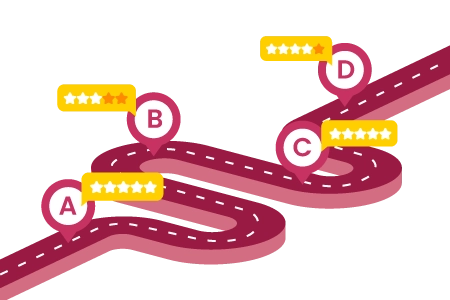
Here is the sequence that consistently delivers meaningful CX transformation and it begins far earlier than the technology conversation.
- Start with CX strategy
Before choosing a single tool, ask a simple question:
“What experience should every customer have with us, every time?”
This becomes the customer promise, the guiding principle for decisions, behaviours, touchpoints, communication and priorities. Without it, technology becomes misaligned, solving problems that don’t matter or creating new ones entirely.
This is where structured frameworks such as Resonate CX’s Customer Experience Solutions help organisations move from fragmented surveys to aligned, enterprise-wide strategy.
- Empower Employees
If employees feel constrained by rigid processes, unclear expectations or inconsistent support, no platform can bridge that gap.
Organisations with strong employee experience consistently outperform on NPS improvement, because empowered employees close loops faster, resolve issues more effectively and create more consistent experiences. CX improves when employees are given both clarity and autonomy.
- Operationalise Insights
Many companies collect feedback, but only a few use it to change how they operate. A meaningful customer feedback loop means:
• Insights trigger process changes
• Issues are prioritised by impact
• Leaders meet regularly to review patterns
• Improvements are tracked against outcome.
This is where CX shifts from reporting to real transformation.
AI-powered analysis tools like AI Robyn help automatically surface themes in open-text feedback, but insight only matters if it drives action.
- Activate Technology Last
When strategy, people and processes are aligned, AI in customer experience can finally become the accelerator it has the potential to be. At this stage, automation will feel seamless, analytics will be feel actionable, and platforms will reduce friction rather than creating it. Technology works best when it’s the last thing you add, not the first.
Summary: Technology Is Not the Answer Unless Your CX Is Guided by Human Insight
In a world obsessed with automation, digital dashboards and predictive analytics, it’s easy to assume that more technology will automatically create a better customer experience. But the organisations that thrive are the ones that anchor every decision in human insight, that truly have a deep understanding of what customers value and how teams actually work.
Technology extends your capability, but CX strategy determines the impact.
It’s the human alignment, not the platform, that defines whether a company becomes truly customer-centric.
Key Takeaway
The future of customer experience belongs to organisations that choose clarity over complexity. CX leadership means knowing that ultimately there are multiple CX success factors but loyalty and customer satisfaction are some of the most important. The Voice of the Customer ROI only shows up when feedback is taken seriously, acted on consistently and woven into the company’s decision-making fabric.
Start with alignment. Build your strategy. Empower your teams.
Then bring in technology to elevate the work already happening.
Ready to make your technology resonate with real results? Build your CX roadmap around people first.
Run an AI-powered CX program beyond surveys
See our platform in action. A live demo tailored to your organization’s needs.









About the Author
Aryne Monton
More Articles
-
- Blog

How to Run a VoC Platform Pilot in 8 Weeks: What to Measure, Who to Involve, and How to Know It’s Working
Most VoC pilots produce a working dashboard and no decision. The problem is undefined success criteria. Here is the 8-week structure that fixes that before the surveys go out. -
- Blog
What a Good Flex Workspace NPS Looks Like in 2027 — and Why Most Operators Are Measuring the Wrong Thing
The 2027 co-working NPS benchmark is 30–55, but context matters. See what your score means and the three metrics that predict renewal. -
- Blog
From Feedback to Insights: The Power of AI Text Analytics
Sampling open-text feedback is worse than no analysis. The highest-urgency signals are just as likely to be in the responses nobody read. Here is how text analytics changes that at...



Resonate Resources

The Definitive Guide to Choosing the Right CXM Software
Choosing the right CXM software takes strategy, requiring you to define goals, assess integrations, and select a long-term partner.
Why Invest in a CX Platform: A Strategic Move for Competitive Advantage
Discover why a CX platform drives better experiences, loyalty, and sustainable growth.
Should You Invest in a Customer Experience Management Platform?
Is a CX platform right for you? See how it centralizes feedback and drives growth.
How to Prove the ROI on CX to Your Board
Learn to prove ROI of Customer Experience by turning sentiment into revenue, retention, and risk insights.
4 Critical Signs You Need a New CXM Platform Solution
Is your CX platform holding you back? Data silos, stagnant metrics, slow insights, and poor integration signal it’s time to upgrade.
NPS Software Buyer’s Checklist: 47 Questions to Ask Vendors
NPS software helps you choose smarter with 47 key questions for better insights, workflows, and impact.
How to Combine NPS and Voice of Customer for a Complete CX Measurement System
Discover how NPS and VoC connect to turn feedback into loyalty and growth.
How Long Does CX Implementation Take? Timeline and Success Indicators
CX implementation timeline? Learn more about honest expectations and proven framework to accelerates success.